

Our Expert in Switzerland
No results available
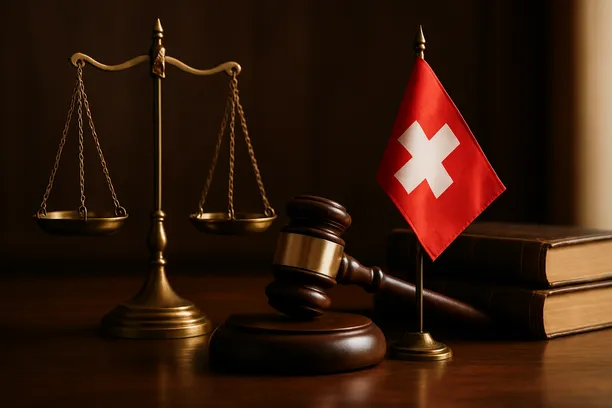
The Swiss Olympic Doping Statute is the primary regulatory instrument governing anti-doping enforcement for athletes competing under the umbrella of Swiss Olympic and its member federations. Adopted to transpose the World Anti-Doping Code into Swiss sport, the statute sets out binding rules on sample collection, anti-doping rule violations (ADRVs), sanctions and multi-tier appeal rights that ultimately lead to the Court of Arbitration for Sport (CAS) in Lausanne. For athletes, coaches and support personnel, understanding the statute’s practical operation, from the moment a doping control officer arrives to the filing of a CAS appeal brief, is not merely academic but career-critical.
This guide breaks down the statute’s key provisions, explains disciplinary timelines under Swiss Sport Integrity, and maps every available appeal route including the narrow judicial review before the Swiss Federal Supreme Court.
Quick answer: The Swiss Olympic Doping Statute is Switzerland’s national-level anti-doping regulation, implementing the WADA Code for all Swiss Olympic member-federation athletes and support personnel.
The statute is issued by Swiss Olympic and administered operationally by Swiss Sport Integrity (formerly Antidoping Schweiz). It applies to every sport discipline affiliated with Swiss Olympic, making it one of the broadest anti-doping instruments in European sport governance. Three core elements define its architecture:
The statute is published and periodically updated on the Swiss Olympic website, with the current consolidated text reflecting the 2024 revision cycle. Swiss Sport Integrity maintains a dedicated doping statute page that provides the operative version alongside explanatory guidance.
The statute catalogues anti-doping rule violations in line with the WADA Code. These categories range from the presence of a prohibited substance in an athlete’s sample, through to use or attempted use, evading sample collection, whereabouts failures, tampering, trafficking, administration, complicity, and prohibited association. Each category carries its own evidentiary threshold and potential sanction range, making precise identification of the alleged violation an essential first step in any defence strategy.
Jurisdiction under the statute depends on the athlete’s classification. National-level athletes fall under Swiss Sport Integrity’s results-management authority, while international-level athletes are typically subject to their international federation’s rules, though testing may still be carried out by Swiss Sport Integrity under delegation agreements. The distinction matters critically at the appeal stage: national-level athletes generally appeal first to the Swiss Sports Tribunal, whereas international-level athletes may proceed directly to CAS.
| Entity type | Coverage under the statute | Practical note |
|---|---|---|
| National-level athletes | Full, testing, results management, sanctions and domestic appeals all governed by the statute | Appeal route usually runs through the Swiss Sports Tribunal before CAS |
| International-level athletes | Testing authority shared with international federation; results management may revert to IF | CAS jurisdiction often applies directly; check IF anti-doping rules for applicable forum |
| Athlete support personnel | Subject to the statute’s conduct and sanction provisions (trafficking, administration, complicity) | Sanctions can include bans from all Swiss Olympic-affiliated activities |
| Event organisers / federations | Obligated to facilitate testing and enforce provisional suspensions | Non-compliance may trigger separate Swiss Olympic disciplinary action |
Under the Swiss Olympic Doping Statute, testing can occur both in-competition and out-of-competition, at any time and any place. In-competition testing is typically conducted at event venues immediately after a competition, whereas out-of-competition testing may take place at an athlete’s home, training facility or any other location. Athletes in registered testing pools must provide quarterly whereabouts information to Swiss Sport Integrity, and failure to be available at the declared location can constitute a whereabouts failure, one of the enumerated ADRVs.
The statute and its procedural annexes safeguard several athlete rights during the doping control process. Athletes are entitled to be notified of the test by an authorised doping control officer and may request to see the officer’s credentials. An athlete may have a representative present throughout the sample-collection procedure, and the athlete personally selects and seals the sample containers. Crucially, every athlete has the right to request a B-sample analysis if the A sample returns an adverse analytical finding. The B-sample analysis is conducted at a different WADA-accredited laboratory or by a different analyst, and the athlete or a representative is entitled to attend.
Anti-doping data, including whereabouts information, test results and medical records submitted for TUE applications, is subject to both the Swiss Federal Act on Data Protection and the WADA International Standard for the Protection of Privacy and Personal Information. Swiss Sport Integrity is obligated to limit data access to authorised personnel and to delete personal data once it is no longer necessary for anti-doping purposes. Athletes who believe their data has been mishandled may lodge complaints with the Swiss Federal Data Protection and Information Commissioner.
| Testing step | Athlete right | Action to take |
|---|---|---|
| Notification by doping control officer | Right to verify officer credentials | Ask for identification; record the officer’s name and authority |
| Sample collection | Right to a representative; right to select and seal containers | Bring a representative; personally inspect and seal all sample kits |
| A-sample adverse finding | Right to request B-sample analysis | Notify Swiss Sport Integrity in writing; request to attend or send a representative |
| Data handling | Right to privacy and data protection | Review consent forms; lodge complaints with FDPIC if mishandled |
The Swiss Olympic Doping Statute recognises the full spectrum of anti-doping rule violations defined by the WADA Code. The most frequently prosecuted violations in Swiss sport include the presence of a prohibited substance in an athlete’s sample, use or attempted use, evading or refusing sample collection, and whereabouts failures (three missed tests or filing failures within a twelve-month period). Less common but equally serious violations include tampering with any part of doping control, trafficking or attempted trafficking, and the administration of a prohibited substance to an athlete.
Sanctions under the statute follow the WADA Code framework. The standard period of ineligibility for a first offence involving a non-specified substance is four years where the violation is intentional, and two years where the athlete can establish that the violation was not intentional. For specified substances, the range starts at a reprimand with no period of ineligibility (where no significant fault or negligence is established) and can extend to two years. Aggravating circumstances, such as use of multiple prohibited substances or use as part of a doping plan, can increase the sanction up to an additional two years beyond the standard.
Conversely, athletes who can demonstrate no significant fault or negligence, or who provide substantial assistance to anti-doping authorities, may receive reduced sanctions.
| Violation type | First-offence sanction range | Aggravating-factor maximum |
|---|---|---|
| Non-specified substance (intentional) | 4 years ineligibility | Up to 6 years |
| Non-specified substance (not intentional) | 2 years ineligibility | Up to 4 years |
| Specified substance (no significant fault) | Reprimand to 2 years | Up to 2 years |
| Whereabouts failures (3 in 12 months) | 1–2 years ineligibility | Up to 2 years |
| Tampering / trafficking | 4 years to lifetime ban | Lifetime ban |
Athletes who require a prohibited substance or method for a documented medical condition may apply for a Therapeutic Use Exemption. The application must be submitted to Swiss Sport Integrity’s TUE Committee, using the standard WADA TUE application form, and must include comprehensive medical documentation: diagnosis, treatment history, a statement from the treating physician explaining why no permitted alternative exists, and, where applicable, specialist reports. Applications should be submitted at least thirty days before a competition wherever possible.
A denied TUE application can be reviewed by WADA, which has the authority to reverse national-level TUE decisions. If WADA upholds the denial, the athlete may appeal to CAS. Industry observers note that TUE appeals at CAS often turn on the quality of the medical evidence: athletes who present detailed specialist reports and evidence of a genuine therapeutic need, rather than generic practitioner letters, tend to have stronger prospects. Where an athlete needs emergency treatment before a TUE decision is issued, the statute permits retroactive TUE applications, but the athlete should document the medical emergency thoroughly and file the retroactive application without delay.
Emergency TUE checklist:
When Swiss Sport Integrity receives an adverse analytical finding or other evidence of a potential ADRV, it initiates a results-management process. The athlete is notified and given the opportunity to respond in writing, request a B-sample analysis and present evidence. If the disciplinary chamber determines that an ADRV has occurred, it issues a written decision setting out the violation found, the sanction imposed and the athlete’s appeal rights. The decision must include a clear statement of the deadline for filing an appeal, typically twenty-one days from receipt of the reasoned decision.
Swiss Sport Integrity bears the burden of establishing that an ADRV has occurred, applying the standard of “comfortable satisfaction”, a standard higher than a balance of probabilities but lower than proof beyond reasonable doubt. Where the athlete bears a burden (for instance, to establish no fault or negligence), the standard is a balance of probabilities. Common procedural defects that can form the basis of a defence or appeal include chain-of-custody irregularities in sample handling, failure to follow WADA’s International Standard for Testing and Investigations, inadequate notification to the athlete, and laboratory departures from the International Standard for Laboratories.
| Stage | Typical timeline | Key action for the athlete |
|---|---|---|
| Notification of adverse finding | Days–weeks after sample analysis | Request B-sample analysis; engage legal counsel immediately |
| Provisional suspension (if applicable) | Imposed at notification or shortly after | Apply for a provisional hearing to lift or modify suspension |
| Written submissions / hearing | Several weeks (varies) | Submit evidence, expert reports and witness statements |
| First-instance decision | Issued in writing with reasons | Note the date of receipt, the appeal clock starts running |
| Appeal deadline | 21 days from receipt of reasoned decision | File statement of appeal with the competent forum (Swiss Sports Tribunal or CAS) |
The Swiss Olympic Doping Statute provides a layered appeal architecture: the Swiss Sports Tribunal for domestic disputes, the Court of Arbitration for Sport in Lausanne for international-level cases and as a second appellate tier, and the Swiss Federal Supreme Court for narrow judicial review. Choosing the correct forum, and meeting the applicable deadline, is the single most consequential decision an athlete makes after receiving an adverse decision.
Where the statute or the applicable federation’s regulations designate the Swiss Sports Tribunal (Sportstribunal) as the competent appellate body, national-level athletes must file their appeal with that tribunal before proceeding to CAS. The Swiss Sports Tribunal applies Swiss arbitration law and its own procedural rules, offering a comparatively fast domestic process. Its decisions are themselves subject to appeal to CAS, meaning the Swiss Sports Tribunal serves as an intermediate step rather than a final forum. Athletes should ensure they file within the deadline stated in the first-instance decision and submit a clear statement of the grounds for appeal together with all supporting evidence.
The Court of Arbitration for Sport in Lausanne exercises jurisdiction over doping ban appeals where the relevant regulations provide for CAS as the appellate body, which is the case for most international-level athletes and for appeals from Swiss Sports Tribunal decisions. A CAS appeal is initiated by filing a statement of appeal within twenty-one days of receipt of the decision being challenged. The statement must identify the parties, the decision appealed against and the relief sought. Within a further ten days, the appellant must file the appeal brief setting out the factual and legal arguments in full.
CAS also offers an expedited procedure and provisional measures, including requests to stay a ban pending the outcome of the appeal, under its procedural rules. Early indications suggest that CAS panels are increasingly receptive to stay requests where the athlete can show irreparable harm, such as missing a major championship during the appeal period.
CAS awards are considered international arbitral awards with their seat in Lausanne and may therefore be challenged before the Swiss Federal Supreme Court (Bundesgericht) under the Swiss Private International Law Act. However, the grounds for challenge are extremely narrow: a party must demonstrate that the arbitral tribunal was improperly constituted, that it exceeded its jurisdiction, that it ruled on matters beyond the claims submitted, that the right to be heard was violated, or that the award is incompatible with Swiss public policy. The practical reversal rate is very low, and the Swiss Federal Supreme Court has repeatedly emphasised its deference to CAS on substantive doping matters.
Nonetheless, the SFT route remains an important safeguard where genuine procedural irregularities have occurred at CAS level.
| Forum | When to file | Practical effect and timeline |
|---|---|---|
| Swiss Sports Tribunal (Sportstribunal) | After domestic federation or SSI first-instance decision, where statute designates the Tribunal as competent | Fast domestic arbitration; decision may be further appealed to CAS (21 days to file) |
| Court of Arbitration for Sport (CAS), Lausanne | International-level athlete, or appeal from Swiss Sports Tribunal decision; 21 days from receipt of written decision | Full arbitration with possible emergency stay; typical procedure 3–6 months (expedited option available) |
| Swiss Federal Supreme Court (SFT) | Challenge of CAS award on limited grounds under Swiss Private International Law Act; 30 days from notification of award | Judicial review only; narrow legal grounds (procedural defects, public policy); low reversal rate; lengthy proceedings |
CAS arbitration involves an initial filing fee, administrative costs and the arbitrators’ fees, which are calculated based on the amount in dispute or on a fixed scale for disciplinary matters. Athletes should also budget for legal representation, experienced sports lawyers with CAS practice are essential, as well as expert witnesses (pharmacologists, laboratory specialists) and travel to hearings in Lausanne. The Swiss Arbitration Centre publishes a cost calculator that provides indicative fee ranges for Swiss-seated arbitration. Some national Olympic committees and athlete associations offer legal-aid programmes for doping-related disputes, and athletes should enquire about such support promptly after receiving a sanction.
Understanding how tribunals have applied the Swiss Olympic Doping Statute in practice helps athletes and their counsel calibrate realistic expectations and identify viable defence strategies. Several categories of decisions are particularly instructive.
CAS panels have consistently upheld the “comfortable satisfaction” standard of proof for establishing ADRVs, while emphasising that the anti-doping organisation must demonstrate the integrity of the entire chain of custody. Where laboratories have departed from the WADA International Standard for Laboratories, CAS has on occasion found that the burden shifts to the anti-doping organisation to prove that the departure did not cause the adverse analytical finding.
On proportionality of sanctions, CAS has accepted that athletes who demonstrate the source of contamination, for instance, a contaminated supplement verified by independent laboratory analysis, may qualify for a significant reduction in the period of ineligibility under the “no significant fault or negligence” provisions. However, merely asserting contamination without corroborating evidence has been consistently rejected.
At the Swiss Federal Supreme Court, challenges to CAS awards in doping cases have overwhelmingly failed. The SFT has confirmed that differences in the assessment of evidence or the interpretation of anti-doping rules do not constitute violations of public policy. The court has, however, annulled CAS awards in rare instances where the athlete’s right to be heard was materially violated, for example, where CAS relied on evidence or legal arguments that were never put to the parties for comment.
If you have been notified of an adverse analytical finding or an ADRV charge under the Swiss Olympic Doping Statute, the following timeline provides a framework for immediate action:
For expert legal representation throughout this process, contact a Swiss sports lawyer through Global Law Experts’ sports practice area directory.
The Swiss Olympic Doping Statute establishes a comprehensive framework that touches every stage of an athlete’s competitive life, from whereabouts obligations and sample collection through to sanctions and multi-tier appeals. Its alignment with the WADA Code means that the rules are internationally recognisable, but their application within Switzerland’s unique institutional landscape, Swiss Sport Integrity, the Swiss Sports Tribunal, CAS and ultimately the Swiss Federal Supreme Court, creates procedural layers that demand specialist navigation. Athletes who act quickly, preserve evidence and engage experienced legal counsel from the outset give themselves the strongest possible foundation for a successful defence or appeal.
Global Law Experts connects athletes, federations and support personnel with leading Swiss lawyers who specialise in sports arbitration, anti-doping proceedings and CAS advocacy.
This article was produced by Global Law Experts. For specialist advice on this topic, contact Dr. Lucien W. Valloni at VALLONI ATTORNEYS AT LAW, a member of the Global Law Experts network.

posted 21 minutes ago

posted 2 hours ago
posted 3 hours ago

posted 4 hours ago

posted 4 hours ago

posted 5 hours ago

posted 6 hours ago

posted 7 hours ago

posted 7 hours ago
posted 8 hours ago
posted 8 hours ago

posted 8 hours ago
No results available
Find the right Advisory Expert for your business
Sign up for the latest advisor briefings and news within Global Advisory Experts’ community, as well as a whole host of features, editorial and conference updates direct to your email inbox.
Naturally you can unsubscribe at any time.
Global Law Experts is dedicated to providing exceptional legal services to clients around the world. With a vast network of highly skilled and experienced lawyers, we are committed to delivering innovative and tailored solutions to meet the diverse needs of our clients in various jurisdictions.
Global Advisory Experts is dedicated to providing exceptional advisory services to clients around the world. With a vast network of highly skilled and experienced advisors, we are committed to delivering innovative and tailored solutions to meet the diverse needs of our clients in various jurisdictions.

Send welcome message