

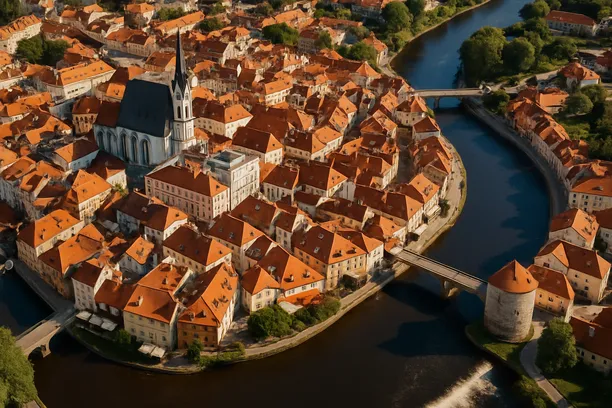
Our Expert in Czech Republic
No results available
Foreign nationals considering Czech real estate face a defining choice between the country’s two largest cities: Prague, the capital and economic powerhouse, and Brno, the Moravian hub that has emerged as a serious alternative for investors and relocating professionals. Both cities are open to foreign buyers, EU and non-EU nationals alike can purchase property in the Czech Republic without restriction, yet the legal processes, tax burdens, price points, and risk profiles diverge in ways that directly affect returns and transaction complexity. With Prague prices reaching historic highs and Brno’s market tightening rapidly through 2025, the timing of this decision carries real financial consequences.
This guide delivers a dimension-by-dimension comparison so you can match your budget, timeline, and investment thesis to the right city before engaging Czech counsel.
Prague has dominated foreign buyer interest for decades, driven by its global brand recognition, deep rental demand from tourists and expatriates, and a liquid resale market. But several converging trends in 2025 are pushing informed buyers to look seriously at Brno. Prague’s average apartment prices have crossed CZK 130,000 per square metre, compressing rental yields and raising entry costs for investors who once viewed the city as undervalued relative to Western European capitals. Meanwhile, Brno’s tech-sector growth, university population, and improving infrastructure have generated strong rental demand alongside prices that remain roughly 40–50% below Prague levels.
For owner-occupiers relocating to the Czech Republic, the calculus is different but equally consequential. Prague offers unmatched international connectivity, English-language services, and cultural amenities. Brno offers a lower cost of living, shorter commutes, and proximity to Vienna and Bratislava. The legal framework for purchasing property is identical in both cities, the same Civil Code, the same Land Registry (Cadastral Office) procedures, the same tax rules, but practical differences in market dynamics, municipal fees, and available housing stock create distinct risk and opportunity profiles that this comparison unpacks.
Since the Czech Republic’s accession to the EU in 2004 and subsequent liberalisation of property laws, EU citizens have enjoyed the same property ownership rights as Czech nationals. They may purchase residential and commercial real estate, including agricultural and forest land, without any permit or special authorisation. Non-EU nationals also face no ownership restrictions on buildings, apartments, and commercial property. The historical restriction on non-EU citizens purchasing agricultural land has been effectively removed for practical purposes in urban real estate transactions in Prague and Brno.
There is no requirement for foreign buyers to hold Czech residency before purchasing property. Ownership of Czech real estate does not, by itself, confer a right to residency, though it may support a long-term visa or residence permit application. Both individual and corporate purchasers (including foreign-incorporated entities) may hold Czech real estate. Many foreign investors choose to purchase through a Czech s.r.o. (limited liability company) for liability and tax-planning reasons, a structure available in both cities.
The legal mechanics of buying property in Prague or Brno follow the same statutory framework under the Czech Civil Code (Act No. 89/2012 Coll.) and the Cadastral Act (Act No. 256/2013 Coll.). The key steps are:
While the substantive law is uniform, several practical differences affect transactions in each city:
Price data for early 2025 confirms the significant gap between the two markets, though Brno has been narrowing the differential through faster appreciation in recent years.
| Metric | Prague | Brno |
|---|---|---|
| Average asking price per m² (apartments, 2025) | CZK 120,000–140,000 | CZK 75,000–95,000 |
| Price trend (2024–2025) | Rising (approx. 5–8% year-on-year) | Rising (approx. 8–12% year-on-year) |
| Entry-level 2-bedroom apartment (60 m²) | CZK 7,200,000–8,400,000 | CZK 4,500,000–5,700,000 |
| Premium central location per m² | CZK 150,000–200,000+ | CZK 100,000–130,000 |
| Supply tightness | Chronic undersupply; new-build pipeline constrained | Undersupply; new development accelerating |
The price gap means a foreign buyer’s capital goes substantially further in Brno. A budget of CZK 8,000,000 (approximately EUR 320,000) buys a standard two-bedroom apartment in a mid-range Prague neighbourhood or a larger or better-located property in Brno. For investors targeting capital appreciation, Brno’s higher percentage growth rate is notable, though Prague’s absolute price appreciation in CZK terms remains substantial given the higher base.
| Factor | Prague | Brno |
|---|---|---|
| Gross rental yield (long-term residential) | 3.0–4.5% | 4.5–6.5% |
| Short-term rental (Airbnb) viability | High demand but increasing regulation | Moderate demand; less regulatory pressure |
| Primary tenant pool | Expats, professionals, tourists, students | Students, tech-sector professionals, domestic migrants |
| Vacancy risk | Very low in central locations | Low; some risk in peripheral areas |
Prague’s short-term rental market faces mounting regulatory scrutiny. The city has implemented registration requirements for short-term rental operators, and further restrictions are under discussion in line with broader EU trends. Brno has been slower to regulate this segment, which may benefit short-term rental investors in the near term but creates regulatory uncertainty of its own.
| Decision Dimension | Prague | Brno |
|---|---|---|
| Legal eligibility | No restrictions for EU or non-EU buyers | No restrictions for EU or non-EU buyers |
| Average price per m² (2025) | CZK 120,000–140,000 | CZK 75,000–95,000 |
| Gross rental yield | 3.0–4.5% | 4.5–6.5% |
| Capital appreciation trend | Moderate (5–8% y-o-y) | Strong (8–12% y-o-y) |
| Real estate transfer tax | Abolished (since 2020) | Abolished (since 2020) |
| Real estate tax (annual) | Higher (Prague applies maximum municipal coefficient of 5) | Lower (Brno applies lower municipal coefficient) |
| Income tax on rental income | 15% (individuals); 21% (corporate), same nationwide | 15% (individuals); 21% (corporate), same nationwide |
| Transaction costs (legal, notarial, registration) | CZK 50,000–150,000 typical | CZK 40,000–100,000 typical |
| Cadastral registration timeline | 30+ days (potential delays) | ~30 days (generally on schedule) |
| Mortgage availability for foreigners | Available (most major banks) | Available (most major banks) |
| Typical LTV for non-residents | Up to 60–80% (income-dependent) | Up to 60–80% (income-dependent) |
| Market liquidity (resale ease) | High, deep buyer pool | Moderate, growing but shallower market |
| Short-term rental regulation | Registration required; further regulation likely | Less regulated currently |
| New-build supply pipeline | Constrained; long permitting timelines | Expanding; permitting somewhat faster |
| English-language legal support | Widely available | Available but more limited |
| International transport links | Major international airport; direct flights to most European cities | Small airport; Vienna airport ~130 km |
The purchase price difference is the most immediately visible distinction between buying property in Prague versus Brno and often the primary driver for foreign buyers considering Brno.
| Cost Component | Prague | Brno |
|---|---|---|
| Purchase price (60 m² apartment, mid-range) | CZK 7,200,000–8,400,000 | CZK 4,500,000–5,700,000 |
| Legal fees (attorney) | CZK 30,000–80,000 | CZK 25,000–60,000 |
| Notarial/escrow fees | CZK 10,000–30,000 | CZK 10,000–25,000 |
| Cadastral registration fee | CZK 2,000 | CZK 2,000 |
| Real estate agent commission (if applicable) | 3–5% of purchase price | 3–5% of purchase price |
| Total estimated entry cost (excluding price) | CZK 250,000–500,000 | CZK 170,000–350,000 |
Agent commissions, which represent the largest ancillary cost, are proportional to the purchase price and therefore significantly lower in absolute terms in Brno. Legal fees also tend to be lower outside Prague, though the complexity of the transaction, rather than the city, is the primary determinant.
Czech tax law is uniform nationwide, but one critical variable, the municipal coefficient applied to the annual real estate tax, differs between Prague and Brno, creating an ongoing cost differential for property owners.
| Tax | Prague | Brno |
|---|---|---|
| Real estate transfer tax | Abolished (since September 2020) | Abolished (since September 2020) |
| Annual real estate tax, municipal coefficient | 5 (maximum permitted) | Lower than Prague (varies by zone) |
| Income tax on rental income (individuals) | 15% | 15% |
| Income tax on rental income (corporate) | 21% | 21% |
| VAT on new-build residential (if applicable) | 12% (reduced rate for residential) | 12% (reduced rate for residential) |
| Capital gains tax (sale within 5/10 years) | 15% on gain (exemptions may apply) | 15% on gain (exemptions may apply) |
Prague’s municipal coefficient of 5, the highest permitted under Czech law, means that the annual real estate tax on an identical property would be substantially higher in Prague than in Brno. While the absolute amounts remain modest compared to property taxes in many Western European jurisdictions, the differential adds up over a multi-year hold period. Capital gains tax exemptions are available for individuals who hold the property for at least 5 years (or 10 years, depending on the acquisition date and circumstances under the Income Tax Act), with the same rules applying in both cities.
For buy-to-let investors, the yield differential is the second most consequential dimension after entry price. Buying property in Prague at current prices generates lower percentage returns but benefits from deeper tenant demand and lower vacancy risk.
Net yields after tax, management fees, and maintenance costs will narrow the gap, but Brno retains a meaningful advantage for investors prioritising cash-flow returns over capital appreciation in absolute CZK terms.
Both cities have delivered strong capital appreciation over the past decade, but their trajectories differ.
Liquidity is a critical consideration for foreign buyers who may not hold Czech property indefinitely. Prague’s market is significantly more liquid, properties in desirable Prague districts attract both domestic and international buyers and typically sell within weeks. Brno’s market, while growing, remains shallower. A foreign investor holding a Brno property may need to price competitively and allow a longer marketing period to achieve a sale, particularly for higher-value properties targeting a narrower buyer pool.
Czech banks, including Česká spořitelna, Komerční banka, ČSOB, and others, offer mortgage products to foreign buyers, though terms vary based on residency status, income source, and the property location.
Prague’s regulatory environment for property development and short-term rental operation is more complex and more actively evolving than Brno’s. Key regulatory risks include:
For buyers purchasing property in Prague or Brno as a primary residence, non-financial factors may outweigh the investment analysis.
| Risk | Prague Exposure | Brno Exposure | Mitigation |
|---|---|---|---|
| Price correction / bubble risk | Higher (elevated price-to-income ratio) | Moderate (lower absolute prices) | Conservative LTV; stress-test affordability at higher interest rates |
| Regulatory change (short-term rentals) | High, active regulatory evolution | Moderate, less regulated but risk of catch-up | Underwrite returns on long-term rental assumptions; monitor municipal policy |
| Liquidity / exit risk | Low | Moderate | Target liquid submarkets (central locations, standard apartment sizes) |
| Currency risk (non-CZK earners) | Same | Same | Currency hedging; consider EUR-linked mortgage products if available |
| Title / encumbrance risk | Moderate (older stock, complex histories) | Lower (but still present) | Comprehensive Cadastral Office search and legal due diligence |
| Construction / permit delays (new-build) | High | Moderate | Include contractual penalties for developer delays; independent legal review of development permits |
| Tenant protection changes | Same | Same | Monitor Czech tenant protection legislation; use compliant lease agreements |
The right choice depends on your investment priorities, intended use, budget, and risk tolerance. Use the following framework to match your profile to a city.
| If your priority is… | Choose… |
|---|---|
| Maximum liquidity and ease of resale | Prague |
| Higher gross rental yield on a given budget | Brno |
| International connectivity and global-city amenities | Prague |
| Lower entry cost and more property for your capital | Brno |
| Capital preservation in a proven, deep market | Prague |
| Higher percentage capital appreciation potential | Brno |
| Short-term rental income (with regulatory awareness) | Prague (higher demand) or Brno (less regulation) |
| Primary residence with large expat community | Prague |
| Primary residence with lower cost of living | Brno |
| Portfolio diversification within Czech Republic | Both, one property in each city |
The core trade-off: Prague offers security, liquidity, and a globally recognised market at a premium price. Brno offers superior yields, lower entry costs, and faster percentage growth in a market that is maturing rapidly but remains less liquid. For foreign investors with EUR 200,000–350,000 to deploy, Brno delivers more property and stronger cash-flow returns. For investors with larger budgets or a priority on capital preservation and exit certainty, Prague remains the stronger choice.
While the Czech property purchase process is relatively straightforward compared to many jurisdictions, several situations move the transaction firmly into territory requiring professional legal advice. Engage a Czech real estate lawyer when:
This article was produced by Global Law Experts. For specialist advice on this topic, contact Martina Kačerová at Caring Legal, a member of the Global Law Experts network.

posted 43 minutes ago
posted 1 hour ago

posted 1 hour ago

posted 2 hours ago

posted 2 hours ago
posted 3 hours ago

posted 3 hours ago
posted 4 hours ago
posted 5 hours ago

posted 5 hours ago
posted 5 hours ago

posted 5 hours ago
No results available
Find the right Advisory Expert for your business
Sign up for the latest advisor briefings and news within Global Advisory Experts’ community, as well as a whole host of features, editorial and conference updates direct to your email inbox.
Naturally you can unsubscribe at any time.
Global Law Experts is dedicated to providing exceptional legal services to clients around the world. With a vast network of highly skilled and experienced lawyers, we are committed to delivering innovative and tailored solutions to meet the diverse needs of our clients in various jurisdictions.
Global Advisory Experts is dedicated to providing exceptional advisory services to clients around the world. With a vast network of highly skilled and experienced advisors, we are committed to delivering innovative and tailored solutions to meet the diverse needs of our clients in various jurisdictions.

Send welcome message