

Author
No results available
International business is not conducted in a vacuum. It follows legal fault lines that are influenced by court rulings, regulatory enforcement, and changing frameworks that specify what businesses are allowed to do, where they are allowed to operate, and how they can compete.
Developments in China and the United States show us how legal systems are influencing global trade and reacting to economic pressures. The legal landscape surrounding cross-border business is becoming ever more organized, assertive, and significant.
After the U.S. Supreme Court ruled that certain emergency tariffs exceeded constitutional limits, the administration has begun exploring other avenues to reimpose trade restrictions. Among the tools under consideration are Sec- tion 301 of the Trade Act of 1974, which addresses unfair or discriminatory trade practices, and Section 232 of the Trade Expansion Act of 1962, which allows tariffs on national security grounds. These offer a more legally durable foundation for trade action. The administration has already indicated that sectors with deeply integrated global supply chains, such as telecommunications equipment, batteries, industrial chemicals, and plastics, could face renewed scrutiny. Rather than relying on broad executive powers that are vulnerable to challenge, tariff policy is more so being channeled through formal frameworks designed to withstand review. Measures that emerge from structured investigative processes tend to be more resilient and less likely to be overturned in court. For businesses in affected industries, this means that market access will also be shaped by legal processes that can redefine the rules of trade.
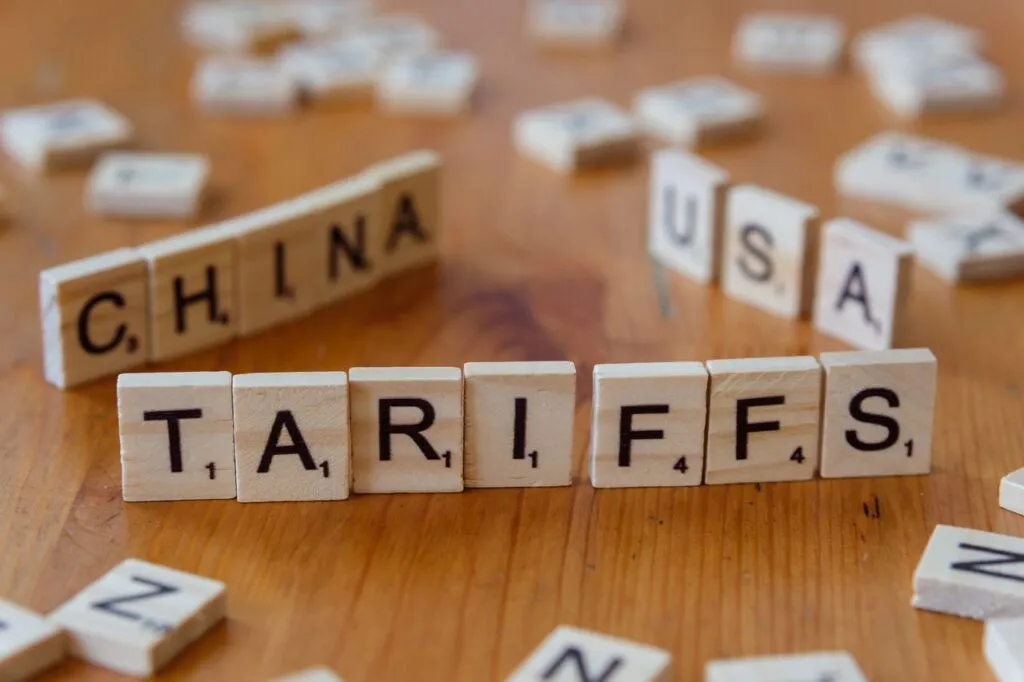
Tariffs remain a defining feature of the economic relationship between the U.S. and China, but recent legal developments may be introducing greater stability. Following the Supreme Court rulings, effective tariff rates on some Chinese exports have declined, bringing their treatment closer to that of other major trading partners. Analysts suggest that this narrowing gap could contribute to a more predictable and transparent trade environment. These rulings simultaneously reinforce that trade policy does not exist outside the law. Courts can shape how (and how far) those powers are exercised. This legal oversight serves an important stabilizing function. It reduces the likelihood of abrupt policy shifts and ensures that changes must pass through established channels. This does not eliminate uncertainty, but it does mean that policy changes are more likely to follow a defined, observable process. Court decisions do not resolve underlying trade tensions. What they do is channel those tensions into formal legal frameworks. In doing so, they provide clearer signals about the durability, scope, and legitimacy of trade measures, allowing for more informed planning.
Recent judicial initiatives in China are aimed at strengthening the integrity of financial markets and improving legal protections for investors. The Supreme People’s Court has signaled its support for expanding the use of representative litigation, allowing groups of investors to bring collective lawsuits against companies accused of misconduct. This shift is significant because representative litigation makes it easier for investors to remedy. Consolidating claims lowers legal costs, improves efficiency, and makes enforcement more accessible. The growing role of civil litigation is an important step in the evolution of the legal system, with private enforcement taking on greater importance alongside regulatory oversight. For businesses, this means increased accountability. Stronger legal remedies have the potential to build investor confidence, reinforcing trust in the fairness and reliability of Chinese financial markets.
Even as trade tensions and regulatory scrutiny continue, capital exchange has not stopped moving between the U.S. and China. Recent data show that U.S. investors have increased their purchases of mainland Chinese and Hong Kong equities, while Chinese investors continue to direct substantial capital into U.S. markets. Cross-border investment relies on legal and regulatory frameworks that investors trust. The fact that international investors remain active in both markets suggests a continued level of confidence in the legal and institutional structures that underpin them. That said, this confidence is not unconditional. Financial institutions remain alert to the risks of sudden shifts in sentiment that could trigger rapid reversals in capital flows. Legal clarity and regulatory stability remain central to sustaining long-term investment.
Legal developments in the technology sector, too, illustrate the convergence of national security and commercial law. U.S. policymakers have raised concerns about decisions to pause or reconsider certain technology restrictions affecting Chinese companies.
Decisions like these are not purely political; they have to move through formal legal channels, shaped by administrative procedures and oversight mechanisms. As a result, legal risk for businesses has expanded beyond traditional areas like corporate structure or contract enforcement. These factors can directly affect market access, operational continuity, and long-term strategic planning.
Legal systems are no longer operating at the margins of the economy; they are part of its core infrastructure. Court decisions and regulatory enforcement are not abstract legal ideas. They shape how companies compete, where capital flows, and which markets remain open or become more difficult to access. In the U.S., judicial review has introduced greater procedural discipline. In China, judicial reforms are aimed at strengthening market integrity and giving investors greater confidence that their rights will be protected. Companies that take legal compliance seriously are better positioned to adapt as regulatory conditions evolve. Those who overlook legal risk may face financial penalties, reputational harm, or disruptions to their operations. Success in today’s global economy does not happen independently of the legal environment. It depends on understanding it and operating within it effectively.
Trade disputes do not arise randomly. They are shaped by the laws governments enact and by how courts interpret and apply them. Investor protections, too, are not static; they are strengthened over time through new litigation tools and evolving legal practice.
For companies operating across borders, the message is clear: legal developments matter.
They offer important clues about where markets may be opening or quietly becoming more restrictive. They signal where risks are growing or beginning to ease, and where opportunities exist. In an interconnected global economy, legal systems are not simply obstacles to overcome. They are the foundation that makes cross-border commerce possible. Understanding that framework and knowing how to operate within it is essential for any business seeking to compete and succeed internationally. The question is no longer whether one’s business has legal exposure in this environment. It does. The more pressing question is whether the people making strategic decisions fully appreciate that, and whether one’s legal function has a genuine seat at the table when those decisions are being made, or whether it is still being brought in after the fact to manage the consequences.
For organizations that get this right, legal strategy becomes a source of competitive advantage: a way of reading the landscape earlier, moving with greater confidence, and avoiding the disruptions that catch less-prepared competitors off guard. For those that do not, the cost tends to arrive suddenly, and in forms that are difficult to reverse.
This article is contributed by members of IPO Pang Shenjun’s Trade Group, which advises international businesses on trade regulation, tariff frameworks, and cross-border legal risk, with a focus on the legal and institutional structures shaping global commerce and economic competition.
This blog is for informational purposes only and does not constitute legal advice or an attorney-client relationship. Readers should consult competent legal counsel before acting on the content, as individual circumstances vary. IPO Pang Shenjun PLLC accepts no liability for decisions made based on this information.
The firm acknowledges the assistance of Ryan Balcom, an International Relations student at Wheaton College and intern at IPO Pang Shenjun PLLC, in the preparation of this article.

posted 25 minutes ago

posted 46 minutes ago

posted 46 minutes ago

posted 2 hours ago

posted 2 hours ago

posted 2 hours ago

posted 2 hours ago

posted 6 hours ago

posted 6 hours ago

posted 6 hours ago

posted 6 hours ago

posted 7 hours ago
No results available
Find the right Advisory Expert for your business
Sign up for the latest advisor briefings and news within Global Advisory Experts’ community, as well as a whole host of features, editorial and conference updates direct to your email inbox.
Naturally you can unsubscribe at any time.
Global Law Experts is dedicated to providing exceptional legal services to clients around the world. With a vast network of highly skilled and experienced lawyers, we are committed to delivering innovative and tailored solutions to meet the diverse needs of our clients in various jurisdictions.
Global Advisory Experts is dedicated to providing exceptional advisory services to clients around the world. With a vast network of highly skilled and experienced advisors, we are committed to delivering innovative and tailored solutions to meet the diverse needs of our clients in various jurisdictions.

Send welcome message