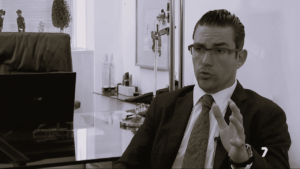
El mejor abogado en delitos de homicidios y asesinatos: entrevista del año 2018. Raúl Pardo Geijo
Raúl Pardo-Geijo Ruiz, Criminal Lawyer from Murcia, Receives Three New Awards in 2018
Raúl Pardo-Geijo Ruiz, a criminal defense lawyer from Murcia and considered among the most prominent legal professionals in Spain, received three awards in 2018 for his work in criminal law.
You have been awarded many times by prestigious institutions for your work as a criminal lawyer, and this year you have received several more recognitions. What have these awards meant for your work as a criminal defense attorney?
In terms of how I perform my work, nothing has changed. I continue practicing in exactly the same way as I did years ago. It is an honor to receive recognition, but honestly, that is not what motivates me to continue doing my job as well as possible.
With so many awards from important institutions given your status as a criminal lawyer at the national level, do you consider yourself the best criminal lawyer?
No. There is always someone better and someone worse. Besides, I could never answer such a question because I do not compare myself with others. My only concern is that my work is of the highest possible quality and, of course, that the outcome is favorable. I am very strict about this. Regardless of the final result, I only feel satisfied if the work has been done in the best possible way.
You recently obtained an acquittal before the Supreme Court for a Senator in the “Púnica” case, where she faced more than five charges (bribery, misconduct in public office, fraud, embezzlement, falsification, etc.), even though the national press and television were predicting a conviction. What did you do to achieve that result, and how satisfied are you?
Quite simply, working on the case, which, incidentally, was extremely demanding due to the constant trips to the Supreme Court. There were also questionable statements from several “cooperating defendants” who were trying to reduce their own sentences by accusing an innocent person.
Overall, I am very satisfied—especially for the client, who undoubtedly deserved this outcome. In fact, she had to temporarily step aside from her political group because another party had made it a condition for approving the national budget.
Some sources describe you as “a life insurance policy,” meaning that if you cannot solve a case, then it probably had no solution. What do you think about that?
I don’t believe that. The truth is you never know whether a case has a solution until the final result arrives. If it works, then it had a solution—but if it doesn’t, does that mean there wasn’t one? I don’t think so. There may have been a solution, but perhaps we simply did not know what it was.
Your firm is considered a strong reference in criminal law at the national level. How do you find the time to handle all the cases that come to you?
I usually have time for two reasons. First, I work a huge number of hours every day. Many times I finish eating in five minutes and continue working. Second, I do not take most of the cases that reach my office, either because they do not interest me or because the client ultimately decides not to proceed.
Could that lack of interest from the client be due to financial reasons?
I never ask the client why their interest has decreased or disappeared. I also do not charge excessive fees, which are quite similar to those of other highly respected colleagues, and I never consider the client’s level of wealth when setting them.
If clients knew the number of hours I dedicate to each case, they might see things differently. I do not only study the facts and design a defensive or prosecutorial strategy; I must also examine every procedural defect or potential issue that could arise during the proceedings and that could ultimately lead to a conviction or an acquittal.
For example, one of the most recent cases I won was precisely because the complainant had not been warned of their obligation to tell the truth, which made their testimony invalid and prevented the conviction of my client.
In every case, the key is to identify the “crucial piece” that can determine either an acquittal or a conviction.
What could make you refuse to take a case?
In cases where I represent the accusation, it happens when the client has unrealistic expectations within criminal law.
For defense cases, there are several reasons, but the main one—unfortunately very common—is when a client arrives with a final conviction and wants to appeal directly to the Constitutional Court or the European Court of Human Rights in Strasbourg (not the Supreme Court). These courts accept cases only under very strict criteria.
Starting a procedure with very little chance of success, especially considering the costs involved, does not appeal to me. Unless there is a clear violation of fundamental rights, I usually decline such cases.
You are involved in some of the most complex economic and corruption cases in the country. Why less frequently in homicide or sexual offense cases?
I have handled—and still handle—these types of cases, especially when I believe in the innocence of the accused. However, sometimes people assume that defending these cases is the same as any other defense, and it is not.
In economic crimes, personal freedom is usually at risk to a much lesser extent than in crimes such as homicide or murder.
What is your opinion of the Spanish Criminal Code?
I believe it is too punitive in some areas and extremely permissive in others. However, my role is not to question the law. That responsibility belongs to the legislator and to the Supreme Court justices, who interpret it through jurisprudence.
It does not bother me to disagree with certain legal provisions because my only interest is applying the law as interpreted by the prevailing jurisprudence. My mission is not to change the law or interpret it according to my personal preferences. I simply follow the rules of the legal system—whether I agree with them or not.
Raúl Pardo-Geijo Ruiz, abogado penalista de Murcia, entre los letrados de mayor relevancia en el ámbito nacional, premiado en numerosas ocasiones por sus actuaciones en materia penal, vuelve a recibir 3 nuevos galardones este año 2018.
-Ha sido galardonado en multitud de ocasiones por prestigiosas instituciones por su condición de abogado penalista y este año ha vuelto a recibir otros tantos galardones ¿qué le han supuesto esos reconocimientos de cara a su trabajo como abogado criminalista?
Concretamente, en lo que al desempeño de mi trabajo se refiere, nada. Sigo ejerciendo de forma idéntica a la de hace años. Es un honor recibir gratificaciones pero, francamente, no es lo que me impulsa a seguir realizando mi labor de la mejor manera posible.
-Con tantos premios de importantes Instituciones dada su condición de abogado penalista a nivel nacional ¿se considera el mejor abogado penalista?
No. Siempre hay alguien mejor y peor. Además, nunca podría responder a una cuestión así por la sencilla razón de que no me comparo. Sólo me interesa que mi trabajo sea de la máxima calidad posible y, por supuesto, que el resultado sea favorable. Soy muy estricto en este ámbito y por eso, al margen del resultado final, sólo me quedo tranquilo si el trabajo está realizado de la mejor manera posible.
-Acaba de sacar absuelta, ante el Tribunal Supremo, a una Senadora en el caso “Púnica” a la que se le imputaban más de 5 delitos (cohecho, prevaricación, fraude, malversación, falsedad, etc) cuando toda la prensa y televisión nacional la daba por condenada. ¿Qué ha hecho para conseguirlo y qué grado de satisfacción tiene?
Pues simplemente trabajar el asunto que, por cierto, ha sido harto costoso por los constantes viajes al Tribunal Supremo y porque había declaraciones de espurias de varios “arrepentidos” que únicamente buscaban su objetivo procesal: atenuar su condena pretendiendo la condena del inocente. Por lo demás, muy satisfecho y sobre todo por el propio cliente que, sin duda, se merece este resultado ya que, incluso, hubo de apartarse temporalmente de su grupo político porque otro partido condicionaba ello para la aprobación de los Presupuestos Generales del Estado.
-Relatan varias fuentes que es “un seguro de vida”, en el sentido de que lo que no puede resolver usted es que no tenía solución. ¿Qué opina de ello?
No lo creo. Sólo puedo decir que nunca se sabe si algo tiene solución hasta que llega el resultado. Si ha funcionado, es que tenía solución pero si no ¿quiere decir que no la tenía? No lo creo, podría tenerla pero quizá no se sabía cuál era.
-Siendo su despacho un potente referente en derecho penal a nivel nacional, ¿de dónde saca tiempo para llevar todos los asuntos que le llegan?
Tiempo tengo, normalmente, por dos razones. La primera es que trabajo muchísimas horas al día; en muchísimas ocasiones en cuestión de cinco minutos ya he comido y continúo trabajando. La segunda es que no cojo la mayoría de asuntos que llegan, bien porque el asunto no sea de mi interés, bien porque el cliente no esté finalmente interesado.
-¿Puede venir motivada esa falta de interés del cliente por una cuestión económica?
No pregunto al cliente por qué ha menguado o desaparecido su interés. Tampoco cobro elevados honorarios (que son bastante similares a los de otros grandes compañeros) y nunca reparo en el nivel de riqueza del cliente para determinarlos. Además, si el cliente supiera las horas que desempeño en cada uno de los asuntos quizá –si es que de honorarios se trata– pensaría de otra manera. No sólo tengo que estudiar los hechos acaecidos y crear una estrategia defensiva o acusatoria sino, además, reparar en absolutamente todo defecto procesal que pueda haber o cualquier incidencia que pueda preverse a lo largo del procedimiento y que pueda suponer una condena o absolución. A modo de ejemplo, uno de los últimos casos que gané fue, precisamente, porque el denunciante no había sido advertido de su obligación de decir verdad y, por tanto, no se pudo condenar a mi cliente porque el testimonio era inválido. En definitiva, dentro de cada procedimiento, hay que dar con la llamada “pieza clave” tanto para conseguir una absolución como para lograr una condena.
-¿Y qué puede determinar su falta de interés a la hora de coger asuntos?
En cuanto a los de “acusación”, sólo cuando es el propio cliente el que tiene pretensiones imposibles en el campo penal. En los relativos a la “defensa”, hay muchos motivos pero el principal –y que desgraciadamente siempre ocurre– es por venir con una sentencia condenatoria y pretender recurrirla ante el Tribunal Constitucional o Estrasburgo (no ante el Tribunal Supremo), que ya sabemos que tienen motivos tasadísimos para su admisión y no se puede desplegar toda la argumentación que durante la instrucción o en el acto del juicio podría haberse realizado. Sinceramente, entablar un procedimiento que tiene poquísimas posibilidades de prosperar, con los costes que ello conlleva, no me agrada en absoluto y, por ello, salvo flagrante vulneración de derechos fundamentales, no lo acepto.
-Pero está personado en los asuntos más complejos del país a nivel económico o de corrupción, ¿por qué en menor medida en delitos de sangre o agresiones sexuales? Sí he llevado –y sigo haciéndolo– este tipo de delitos (sobre todo cuando creo en la inocencia) lo que ocurre es que a veces se piensa que una defensa sobre este tipo de asuntos es como cualquier otra y no lo es. En un delito económico se pone en juego la libertad en muchísima menor medida que en un delito de homicidio o asesinato.
-¿Qué opina del Código Penal Español? Pienso que es demasiado represivo y, sin embargo, en determinados hechos, extremadamente permisivo. Lo que ocurre es que mi labor no es cuestionar la Ley. Eso es tarea del Legislador y de los magistrados del Tribunal Supremo que, con mayor o menor acierto, la interpretan a través de la creación de jurisprudencia. No me importa estar en desacuerdo con determinados artículos porque únicamente me interesa aplicarlo tal y como lo considera la jurisprudencia mayoritaria. No es mi misión cambiar la ley ni pretendo darle la interpretación que me agrade, simplemente cumplo las normas del juego, me gusten o no.